
Case study 01 / Government / Justice
Helping people reply to a jury summons.
Designing an accessible way for citizens to respond to jury duty, while improving the work behind the service.
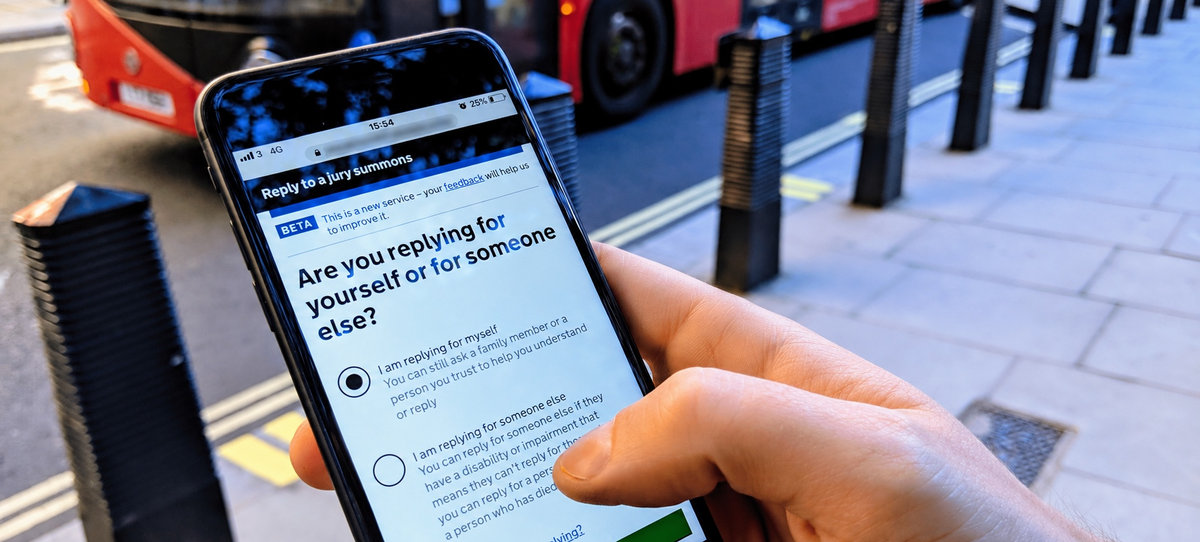
A service that had to work for everyone
Replying to a jury summons is an unfamiliar task with legal consequences. The existing service relied on paper forms, letters and telephone support. It was difficult for some citizens to navigate and created substantial processing work for the Jury Central Summoning Bureau.
HM Courts & Tribunals Service needed an accessible digital route that made replying easier, reduced avoidable administration and still supported people who could not use an online service. Cogworx worked as part of the wider HMCTS team, alongside development partner CGI, from discovery through service assessments and into live operation.
Understanding the whole journey
An eight-week discovery looked beyond the reply form. The team followed the service from courts requesting jurors through to expenses and support after a trial. We observed bureau staff handling calls and processing replies, categorised citizens’ questions, and interviewed serving jurors at Crown Courts.
Experience maps, process maps and user journeys brought together the needs of citizens, court staff and the bureau. This made the work behind the service visible and helped the team identify where clearer information or a different process could prevent problems later in the journey.

Designing across digital and paper
We developed ideas from early prototypes into interactive coded journeys, testing and refining them with citizens and staff. Research included people with access needs, with later prototypes tested using assistive technologies. The design covered both the public-facing reply journey and the tools staff needed to process responses.
The paper summons pack, reply form and expenses guidance were part of the same design problem. Testing these alongside the online service helped the team improve the whole experience, including the information that people received before deciding how to reply.

Testing the service in real conditions
During private beta, the team compared two Crown Courts: one offered the digital service alongside paper, while the other provided a comparison using the existing route. We tracked support calls, interviewed jurors who had completed the journey, and asked people who chose paper what had influenced their decision.
A performance framework brought together analytics and operational data so the team could monitor adoption, completion and service performance. Research also included people with intermittent internet access and people who needed support. After private beta and assessment, public beta was rolled out to courts over six months.

The difference it made
Reported results include more than one million summons replies supported since 2019, including over 650,000 digital replies and 280,000 processed automatically without staff intervention. User satisfaction was reported at 85–90%.
The service achieved a “Met” result at its Live assessment in 2020. The team continued to adapt it to user feedback, operational needs and changes in policy, including the disruption caused by COVID-19.
What this shows
An accessible digital service depends on the information, offline routes and operational work around it.
Project status and figures reflect the information available when this case study was produced.